KINGMAKER
"I've been things and seen places."-- Maé West
THE PATTERN
From a young wartime society figure in London, to the insider wife of a Hollywood and Broadway producer, to a political kingmaker, and finally to a respected US Ambassador to France.
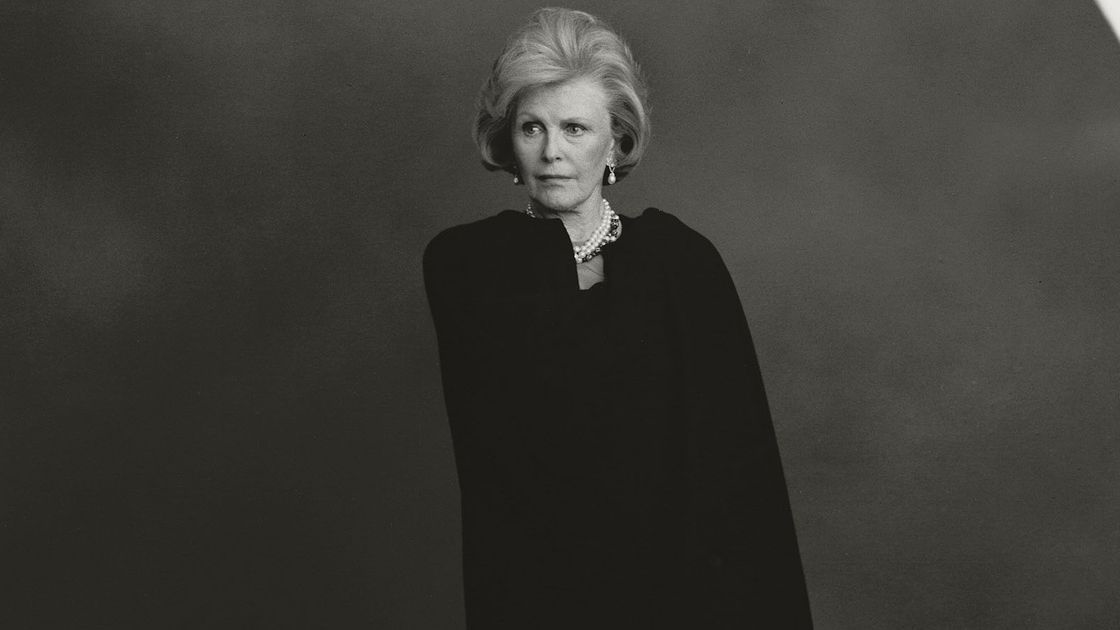
No, I'm not talking about me, I don't have the wardrobe for it. I'm talking about Pamela Churchill Harriman. Daughter-in-law of Winston Churchill, who she called papa, and mother of Winston Churchill who called her mama, so the old man's name skipped straight down through her. Bear with me, there's an incredible story here, though for the French in me that setup was about as weird as American summer camp.
I finished Kingmaker: Pamela Harriman's Astonishing Life of Power, Seduction, and Intrigue this week, and the woman's life is genuinely off the charts. She lived the war inside Downing Street, whispering to papa, and died in Paris as the American ambassador to France, five decades and two countries later, having helped put Bill Clinton in the White House, backing him while he was still a long shot. And yes if you wonder, she changed nationality in between.
That woman reinvented herself again and again in an era when a woman was allowed exactly one act. Every single time her world shifted under her, she rebuilt herself into exactly what the new one needed, and got more powerful for it.
I want to talk to you about what her life actually teaches, past all the noise around it.
ACT ONE: CHURCHILL
She started as an English baron's daughter with decent breeding, no fortune, and one killer instinct. Marry up, and marry into the middle of history.
She married Randolph Churchill in 1939, which parked her inside the Churchill household exactly as her new father-in-law became the most important man alive. While her husband did a bang-up job at drinking himself stupid, she worked the war from inside Downing Street, close to papa, cozy with every American envoy Roosevelt shipped over, useful in a way that had nothing to do with her title and everything to do with what she overheard and who she disarmed.
The marriage was over very fast, but her spot at the center of things did not, because she'd made herself valuable to the whole operation, not just to the man she'd married into it. Actually, he didn’t see much value in her.
That's lesson one, and it holds up the rest. She never mistook the ladder for the roof. The marriage got her in the building. That was the whole point: to be exactly there, and when the marriage fell apart, she kept the address (and the name), because she'd built her worth on something that outlived the guy who let her through the door.
ACT TWO: HAYWARD
When wartime London stopped being the center of the universe, she moved the whole act to a new one.
She got her first marriage annulled by the Vatican, converted to Catholicism, the whole production, because she was certain Gianni Agnelli, the Fiat heir, was going to marry her. He did not, she wasn't Italian enough. So she landed on Leland Hayward, one of the great Broadway and Hollywood producers. By doing that, she installed herself at the heart of a business that shares precisely nothing with Churchill's war cabinet except that both run entirely on story, ego, and who you know.
Think about how brutal that switch actually is. The skills that made you indispensable in one life are confetti in the next. Nobody in Hollywood needs you to whisper NATO strategy during an Oscar party.
The reason she pulled it off is because she'd figured out that every world she crashed ran on people. Knowing what someone wants before they've admitted it to themselves, and becoming the person who can get it for them. The trick changed every time, because circumstances changed, but the engine underneath, which was the human became essential, she just picked up and re-aimed at whatever game was in front of her.
That's the reinvention almost nobody manages. Finding the one thing you're genuinely great at under all your specific résumé, and clocking that it works in places you've never set foot.
ACT TWO: HARRIMAN
Then the part her enemies never forgave.
After Churchill and Hayward, she married Averell Harriman. The second husband died, she didn’t divorce twice. Harriman was an American statesman, a big name. She became a US citizen, and in her sixties, when most people are picking out a quiet chair to nap watching the Tour de France, she turned into the single most effective fundraiser the Democratic Party had.
She rebuilt the party's money machine after Reagan flattened them, ran salons that kept the whole demoralized apparatus breathing, funneled millions in, and threw her weight behind a young governor named Clinton early enough that when he won, he made her ambassador to France. She died in that post, in Paris, in 1997, after a swim at the Ritz-Carlton, of course.
For every person who called her a kingmaker, there was one calling her a courtesan, a woman who slept her way into every building she ever entered. The word "whore" shows up in her story more often than the word "strategist," and she was doing more consequential work than half the men whose names got the respect. I wasn't there, I'll never actually know, but what I know is that the story is far too good to pass on.
What I take from that fight is about the narrative she played. Radical reinvention always gets called something ugly. The person adapting fastest, shedding old versions of themselves, showing up powerful somewhere they have no traditional right to be, that person makes everyone else deeply uncomfortable, and the discomfort comes out as an accusation.
If you have ever reinvented yourself and felt people quietly filing you under fraud, you are in spectacular company. That reaction is not proof you did something wrong. It's usually proof you moved faster than the people watching could stomach.
So when your world shifts, and it will, every day, the question is the one she answered multiple times. What am I actually great at underneath all this, and which new game does it belong in now?
Rebuild around that answer, and when someone calls you a fraud for pulling it off, and someone will, remember she died an ambassador with the Legion of Honor incoming, while her critics died being right about nothing.
Let them call it whatever they need to.
— Théo
Share:
.png)
.png)
Have a question or a story to share?
info@theomahy.com














.jpg)